What to eat before exercise for peak performance
What you eat in the hours before training can make all the difference. Here is how to build the best pre-workout meal.
 Fitness
Pre-workout nutrition: everything you need to know
Before exercise, what you eat matters as much as your gear
You have set aside an hour for your workout. You slept well, you are motivated. But you skipped the pre-workout meal because you were short on time, or you ate too heavy too close to the session. The result: heavy legs, energy that crashes halfway through, and nausea that ruins everything. Millions of athletes experience this every week without understanding why.
The truth is that pre-workout nutrition is one of the most underestimated variables in performance. What you put on your plate in the 2 to 3 hours before training directly influences your endurance, strength, focus, and recovery. This guide explains what to eat, how much, and when, so you never again go into a session running on empty or with an overfull stomach.
Carbohydrates: your body's essential training fuel
During physical exercise, whether running, weight training, or a HIIT class, your body draws first from its muscle glycogen stores. These stores are built from the carbohydrates you eat. When they are well stocked, you perform better, for longer, with less perceived effort. When they are depleted, the body searches for other energy sources and performance drops.
This is why complex carbohydrates play a central role in the pre-workout meal. Rice, whole-grain pasta, oats, sweet potatoes, or whole-grain bread are excellent choices: they release energy gradually, without causing a glycemic spike followed by a brutal crash. In contrast, fast sugars taken on their own can create a false energy start that works against you mid-session.
The recommended amount varies by session intensity and your body size, but for a one-hour moderate-intensity session, a portion of 50 to 80 grams of complex carbohydrates in the 2 hours before training is a solid benchmark.

Protein before exercise: useful, but not the priority
The proteins you eat are not the fuel for exercise, but they contribute indirectly. Taken before a strength training session or any exercise involving significant muscular load, they supply the amino acids needed to limit muscle breakdown during effort.
A moderate amount, between 15 and 25 grams, is enough in the pre-workout meal. Greek yogurt, two eggs, a handful of legumes, or a portion of lean meat work perfectly. The goal is not to flood the body with protein before training, but to give it the building blocks available to protect muscle.
Be careful, though: too large a quantity of protein before training slows digestion and can cause gastric discomfort during the session. The golden rule is to keep the portion reasonable and pair proteins with carbohydrates for a balanced meal.
Ideal timing: when should you eat before training?
This is often the most practical question, and the most poorly answered. Eat too early, and your energy reserves are no longer at their peak when you train. Eat too late, and digestion is not complete: blood flow is mobilized by the digestive system instead of fueling your muscles.
The main meal should be taken 2 to 3 hours before the session. It can include a portion of complex carbohydrates, a light protein source, and minimal amounts of fats and fiber, which slow digestion. If you train early in the morning or if the previous meal was too long ago, a small snack 30 to 60 minutes before can do the job: a banana, a slice of whole-grain bread with almond butter, or a light smoothie.
Beyond timing, listen to your body. Some people tolerate eating 90 minutes before running very well. Others need 3 hours. There is no universal rule, but a shared logic: complete digestion before performing.

What to avoid right before a training session
Just as there are foods you should eat, certain foods can seriously compromise your session if timed poorly. Very fatty meals are the first culprits: fried foods, rich sauces, or cured meats slow gastric emptying and keep the body in digestion mode during exercise, diverting energy away from the muscles.
Foods very high in fiber, such as large amounts of legumes or cruciferous vegetables (cabbage, broccoli), can cause bloating and digestive cramps in the hours after eating them. Not ideal when you are planning a run or an intense session. The same goes for very spicy foods, which can irritate the digestive tract and create discomfort that is hard to ignore when your heart rate rises.
Finally, avoid excess refined sugar right before training. A soda or a chocolate bar can trigger an insulin spike followed by reactive hypoglycemia right in the middle of your session: the exact opposite of what you want. If you need a quick sugar source, a banana or a date is a better choice, as they also provide useful minerals.
Training on an empty stomach: an option that does not suit everyone
Increasingly practiced in the context of intermittent fasting, training on an empty stomach means exercising before the first meal of the day. For some practitioners, especially in low-intensity endurance disciplines, this approach can promote fat use as fuel and improve metabolic flexibility.
But fasted training is not right for everyone or every type of effort. High-intensity sessions, heavy weightlifting, or long-duration training require well-filled glycogen stores. Without available fuel, the body may break down muscle tissue to produce energy, which contradicts the goal for many people.
If you practice intermittent fasting and want to synchronize your training with your eating window, the ideal approach is to schedule intense sessions just before breaking the fast, or in the first hours after the first meal. This allows you to benefit from both the adaptations associated with fasting and the energy needed for performance.
Key takeaways
Pre-workout nutrition rests on three pillars: complex carbohydrates to fill energy stores, a moderate dose of protein to protect muscle, and appropriate timing to allow digestion to complete. A meal taken 2 to 3 hours before the session is the ideal window for the majority of athletes. For morning sessions or when hunger strikes close to training time, a small snack 30 to 60 minutes before is an effective alternative. Very fatty or high-fiber meals, or meals with fast sugars, should be avoided in the 60 to 90 minutes before training. Training fasted is a valid option for certain profiles, particularly for light endurance work, but is not recommended for intense sessions without progressive adaptation. Your muscle recovery also depends on what you eat after the session: the pre-workout meal prepares, the post-workout meal rebuilds.
Medical disclaimer
The information presented in this article is provided for educational and general purposes only. It does not constitute medical advice and does not replace a consultation with a healthcare professional or a sports nutritionist.
Nutritional needs vary according to age, weight, activity level, goals, and any existing health conditions. If you are following medical treatment, if you have digestive or metabolic disorders, or if you are looking to optimize your nutrition for specific athletic goals, consult a doctor or a registered dietitian.
The recommendations in this article are aimed at healthy adults engaged in regular physical activity. For competitive athletes or individuals with special nutritional needs, personalized follow-up is strongly recommended.
Optimize your training sessions with Ember
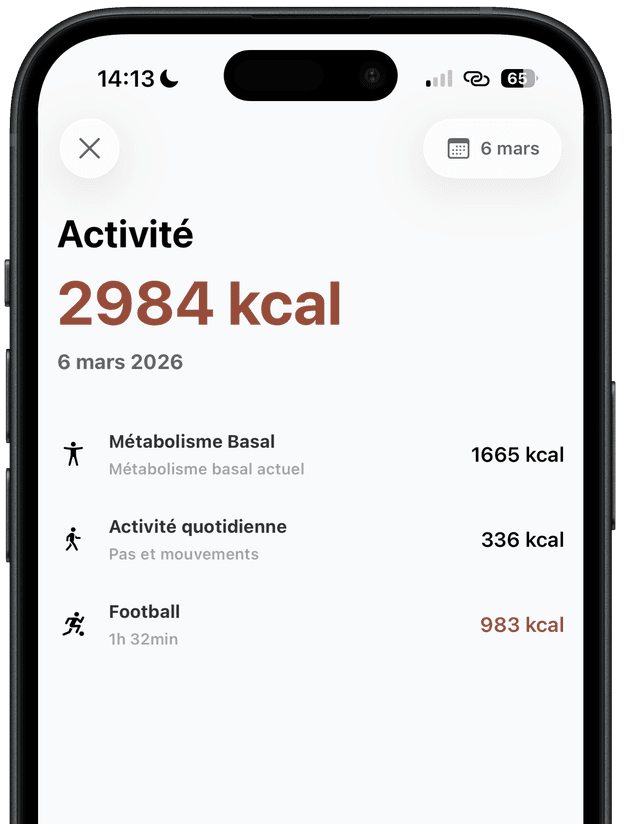
Ember helps you sync your eating window with your workouts to perform at your best throughout the day.
También te puede gustar
Ver todos los artículos¿Cuántas calorías quema Pilates?
Datos de calorías por nivel y peso corporal, comparativa con otras actividades y consejos para maximizar el gasto.
¿Cuántas calorías quema la natación?
Datos de calorías por brazada, peso e intensidad, comparación con correr y andar en bicicleta, consejos para maximizar la quema.
Entendiendo los macronutrientes
Proteínas, carbohidratos, grasas: aprende el papel de cada macro y cómo equilibrarlos para tu objetivo.