GLP-1 and weight loss: the scale is not the whole story
With Ozempic, Wegovy and Mounjaro, the question is no longer only how many kilos are lost, but how they are lost. Here is what recent research can actually tell us.
 Health
GLP-1, weight and muscle: understanding what matters
The number on the scale does not tell the whole story
Treatments in the GLP-1 receptor agonist family have become central to the weight-loss conversation. Their effectiveness is often reduced to an impressive number on the scale. Yet two people can lose the same amount of weight with very different changes in body composition.
Some of the weight lost can be fat mass, but some can also be lean mass. Lean mass includes muscle, but also water, organs and other tissues. The goal is not to treat every change in lean mass as alarming, but to understand what studies actually measure and why strength matters alongside weight.
In this article, GLP-1 refers to a family of treatments prescribed in specific medical situations. It does not recommend a medication or offer a personalised plan. It provides context for reading the information circulating around this topic.
Why weight falls with a GLP-1 treatment
GLP-1 receptor agonists and treatments that also act on GIP change several signals involved in appetite and blood-glucose regulation. Many people eat less, sometimes with a reduced sense of hunger or less persistent food noise. Lower energy intake can lead to substantial weight loss.
But the medication does not decide on its own where every lost kilo comes from. Meal composition, activity, rate of weight loss, age, health status and starting point all influence the response. Weight loss can also change nutritional needs and make it harder to eat enough when appetite drops sharply.
This is why results should not be judged by weight alone. Body composition and the ability to maintain everyday activities provide a fuller picture of progress.
Lean mass does not automatically mean lost muscle
The term “lean mass” is often used as a synonym for muscle, but that is not accurate. Bioimpedance scales and scans estimate different body compartments, each with a margin of error. A drop in lean mass can reflect a change in water or glycogen, not only a loss of muscle fibres.
That distinction does not make the issue unimportant. Skeletal muscle contributes to strength, balance, movement and the ability to remain independent. A reduction in weight accompanied by lower strength or performance therefore deserves attention, even if the number on the scale keeps falling.
Researchers consequently recommend talking about preserving lean mass and muscle function, rather than claiming that every part of weight lost beyond fat is muscle. This distinction avoids two opposite mistakes: dismissing a real functional problem or creating unnecessary alarm from an imperfect measurement.

What recent studies actually show
The available results do not provide one percentage that applies to everyone. An analysis published in the Journal of the American College of Cardiology in 2026 reported that the lean-mass share of weight lost ranged from 5.7% to 38.9% across the studies reviewed. Methods and populations differed, and most studies did not properly assess strength or performance.
A review in the Annals of Internal Medicine estimated that around 28.3% of median weight loss in incretin studies corresponded to muscle-based indices. This must not be read as proof that 28.3% of muscle is systematically destroyed: the indices, devices and thresholds used are not the same from one study to another.
A recent review on musculoskeletal preservation makes an important point: any substantial weight loss can reduce lean mass, whatever method is used. The real question is therefore the overall quality of weight loss, including strength, mobility, bone health and adequate nutrition, not only how quickly the kilos disappear.
What may help preserve strength
Research and supportive-care recommendations point towards a simple approach: avoid letting reduced appetite lead to an inadequate diet, and keep a regular muscle stimulus. Protein needs are not identical for everyone. They depend on age, body size, activity, total intake and medical circumstances. A healthcare professional can help set an appropriate target, especially when appetite is very low.
Strength training is the other central lever. It does not need to be an extreme programme: bodyweight exercises, light loads or machines can provide a useful stimulus when adapted to a person’s abilities and any contraindications. Our guide to strength training versus cardio explains why the two do not serve exactly the same goals.
Adequate food, reasonable progression and proper muscle recovery matter more than a miracle food or one universal protein target. If nausea, vomiting, diarrhoea or loss of appetite makes it difficult to eat or drink properly, speak promptly with the team managing the treatment.

Which markers to follow beyond weight
Weight is still useful, but it should be placed in a broader picture. Changes in waist circumference, strength in familiar movements, endurance, day-to-day energy and the ability to perform normal activities provide additional information. A body-composition assessment may sometimes help, but it should be interpreted in light of the method used and the clinical context.
Smartwatches, connected scales and before-and-after photos can help observe a trend, not make a diagnosis. Hydration, measurement time and the device used can all change the result substantially. Comparing measurements taken under similar conditions is more useful than reacting to a single number.
If strength drops noticeably, fatigue persists, eating becomes difficult or weight loss is very rapid, contact the doctor or dietitian supporting the process. Ember can help you observe habits, but it does not replace clinical follow-up.
What to remember
GLP-1 treatments can lead to weight loss, but the scale alone cannot distinguish fat, water and muscle. Lean mass is not synonymous with muscle, and studies use different methods, so one percentage cannot be applied to everyone. To support muscle function, the priorities are adequate food, an individualised protein intake and strength training suited to each person’s situation. Strength, energy and mobility are as important as body weight. Any treatment change or difficulty eating, drinking or exercising should be discussed with a healthcare professional.
Medical disclaimer
This article is provided for educational purposes and is not medical advice, a diagnosis or a treatment recommendation. GLP-1 medicines are prescribed and monitored by healthcare professionals; never change or stop a treatment without medical advice.
Nutritional needs, weight-loss goals and the ability to exercise vary from person to person. If you take a GLP-1 treatment, have a chronic condition, are pregnant or breastfeeding, or have a history of an eating disorder, seek personalised support. Contact a healthcare professional promptly if you cannot eat or drink enough, if vomiting persists or if you experience marked weakness.
Track more than the number on the scale
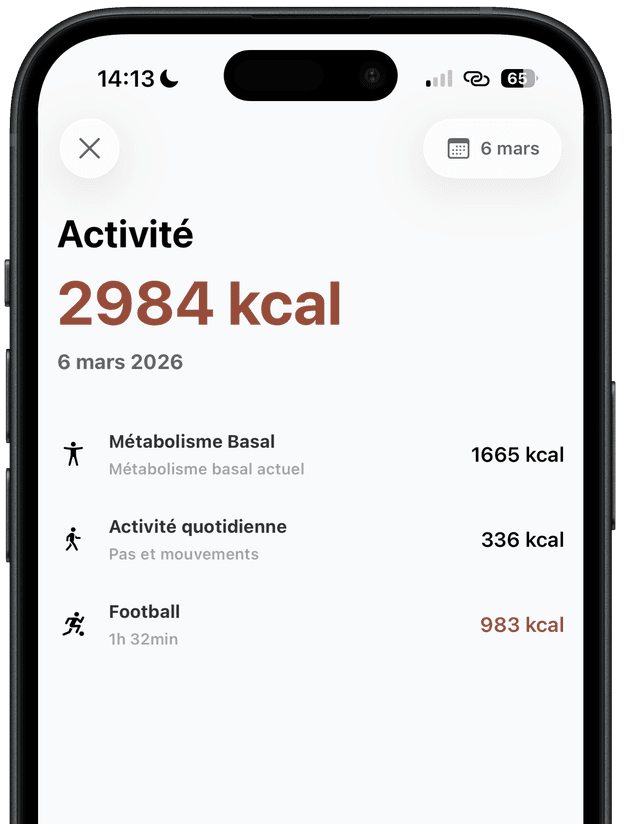
Ember helps you observe your meals, activity and trends so your goals can fit into a sustainable routine.
You might also like
View all articlesWater retention: understand and act
Causes, symptoms and practical solutions to reduce water retention and restore lightness and well-being.
Hydration: how much water should you drink per day?
Daily water needs, signs of dehydration, hydrating foods and practical tips to stay well-hydrated throughout the day.
Understanding macronutrients
Proteins, carbs, fats: learn the role of each macro and how to balance them for your goal.