Jump Rope: The Exercise That Burns More Calories Than You'd Think
10 minutes of jump rope can match 30 minutes of jogging. Here's what the science actually says about this exercise anyone can do.
 Fitness
Everything you need to know about jump rope and its impact on your body
Jump rope: the most underrated exercise in your routine
It's often associated with schoolyard recess or a boxer's warm-up routine, but jump rope deserves a much bigger place in your fitness routine. This accessory that fits in your pocket is one of the most effective tools for burning calories in minimal time, while also training coordination, balance, and cardiovascular endurance.
What makes jump rope so interesting is its effort to result ratio. Contrary to popular belief, it's not just a children's game: jumping rope continuously engages the entire body and demands an energy expenditure close to that of sprinting. Ten minutes are enough to seriously raise your heart rate and trigger a calorie burn that few bodyweight exercises can match.
Long reserved for boxers and athletes who needed explosive, low-footprint cardio, jump rope is now making a comeback thanks to its simplicity: no gym required, a few square meters of space is enough, and the only investment is a rope that costs just a few dollars.
How many calories does a jump rope session actually burn?
Calorie burn from jump rope depends mainly on your body weight, jump pace, and the duration of the effort. For a 154-pound (70 kg) person, a 10-minute session at a moderate pace (100 to 120 jumps per minute) burns on average between 100 and 130 kcal. At a faster pace, that figure can climb to 150 kcal over the same duration.
Over a full 30-minute session, a 154-pound person can burn between 300 and 450 kcal, a figure comparable to a HIIT session of the same length. For a 198-pound (90 kg) person, that expenditure can exceed 500 kcal over the same period. For comparison, it takes roughly 45 to 50 minutes of running at a moderate pace to reach an equivalent burn.
What sets jump rope apart is its caloric density per minute: between 10 and 16 kcal per minute depending on intensity, a level only the most physically demanding activities manage to reach. In ten minutes of jump rope, you can burn as much as in twenty minutes of easy cycling.

A full-body exercise that works far more than your calves
Many people assume jump rope only works the calves and shoulders. In reality, it's one of the rare exercises that activates the upper and lower body simultaneously while demanding fine coordination between the eyes, wrists, and footwork.
With every jump, the calves, quadriceps, and glutes absorb the impact and propel the body upward, while the forearms and shoulders maintain a steady rotation of the rope. The core works continuously to stabilize the trunk and keep balance. This full-body engagement is exactly why ten minutes of jump rope often feels more intense than ten minutes on a treadmill.
Beyond calorie burn, regular practice improves motor coordination, proprioception, and agility, qualities that directly benefit other sports like tennis, boxing, or team sports. This is precisely why jump rope remains a staple of physical conditioning for boxers and basketball players.
Jump rope, running, or HIIT: what should you choose based on your goals?
If your main goal is to maximize calorie burn in minimal time, jump rope and HIIT are largely comparable, both capable of exceeding 10 kcal per minute at high intensity. The real difference lies in accessibility: jump rope requires no bulky equipment and no dedicated space, making it an ideal option for training at home or on the go.
Compared to running, jump rope has an often overlooked advantage: it limits repeated impact on the joints thanks to shorter ground contact time, while building an explosiveness that classic jogging doesn't train. That doesn't mean it replaces running for long-duration endurance, but it makes an excellent complement for varying your training stimulus and breaking out of the routine that often stalls progress, whether in cardio or strength training.
In practice, alternating between the two disciplines during the week, with two short and intense jump rope sessions plus one longer run, lets you cover both pure cardiovascular work and functional strength conditioning, without either one taking over.
How to start jump rope without getting injured
Jump rope places repeated stress on the ankles and calves, which is why beginners often feel unusual soreness after their first sessions. To progress without pain, it's better to start with short 3 to 5-minute sessions broken up by 30 to 60-second rests, rather than jumping straight into a continuous 20-minute effort.
The surface you choose matters just as much as your technique: favor a surface that absorbs impact, like a wood floor, a workout mat, or grass, rather than bare concrete, which is especially hard on the joints. Shoes with good cushioning, even for indoor practice, noticeably reduce the risk of Achilles tendon tendinitis.
As with any impact activity, muscle recovery between sessions deserves real attention. Two to three sessions per week are plenty to make progress, while leaving at least 48 hours for the calves and tendons to recover. Increasing duration or intensity by roughly 10% per week allows for steady progress without overload.

Jump rope and intermittent fasting: what's the right timing?
Many people who practice intermittent fasting wonder whether it's reasonable to jump rope during their fasting window. The answer mostly depends on the intensity involved. For short, moderate sessions of 10 to 15 minutes, exercising while fasting generally isn't a problem and can even favor fat as a fuel source, since the body is in a state of low, easily mobilized glycogen reserves.
For longer or very high-intensity sessions, it's better to schedule them toward the end of your fasting window or after a light meal, to avoid excessive fatigue or low blood sugar. Jump rope remains an excellent complement to a weight loss strategy built around a well-managed caloric deficit, thanks to its ability to generate a high energy expenditure in a short amount of time, a real asset on busy days.
With Ember, you can track your fasting window in real time and schedule your jump rope sessions according to your fasting state, without having to mentally juggle timing. This consistency between nutrition and exercise is often what makes the difference in the long run.
Key takeaways
A 30-minute jump rope session burns between 300 and 500 kcal depending on your weight and intensity, a level comparable to HIIT and well above walking. It's a full-body exercise that works the legs, arms, and core while building coordination and agility. Starting with short 3 to 5-minute sessions broken up by rests lets you progress without injuring your calves or tendons. Practiced at a moderate intensity, it fits well into an intermittent fasting routine, especially toward the end of the fasting window for more intense efforts. Inexpensive and practical almost anywhere, jump rope remains one of the most efficient ways to burn calories in minimal time.
Disclaimer
The information in this article is provided for educational and informational purposes only. It does not constitute medical advice, a diagnosis, or a personalized recommendation. Jump rope is a high-impact activity that places significant stress on the ankles, knees, and tendons, and it may not be suitable for everyone, particularly those with a history of joint issues or recent injuries. Consult a doctor or healthcare professional before starting this activity or any other intensive training program. Ember is an intermittent fasting tracking app and is not a medical tool.
Track your jump rope sessions with Ember
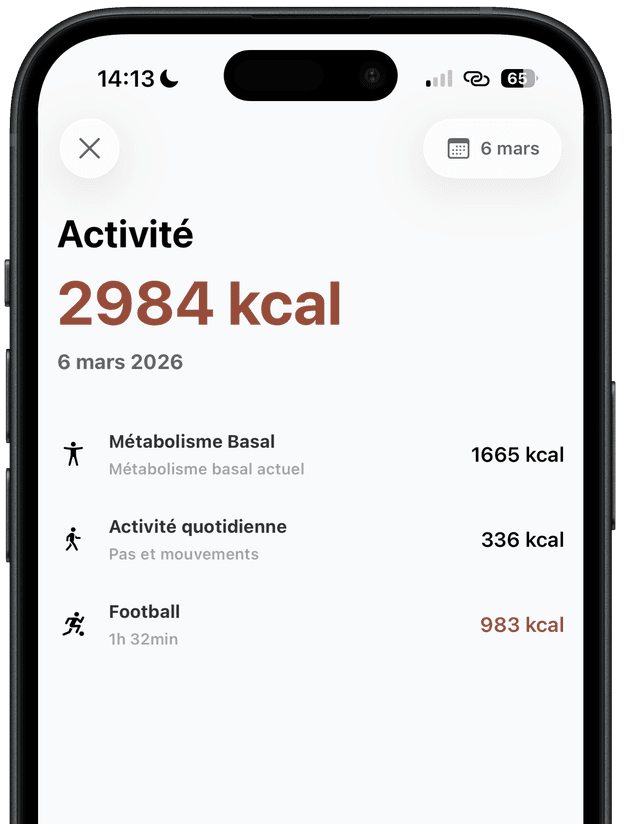
Ember logs your workouts and helps you schedule your jump rope sessions around your fasting window to maximize fat burning.
También te puede gustar
Ver todos los artículos¿Cuántas calorías quema Pilates?
Datos de calorías por nivel y peso corporal, comparativa con otras actividades y consejos para maximizar el gasto.
¿Cuántas calorías quema la natación?
Datos de calorías por brazada, peso e intensidad, comparación con correr y andar en bicicleta, consejos para maximizar la quema.
Entendiendo los macronutrientes
Proteínas, carbohidratos, grasas: aprende el papel de cada macro y cómo equilibrarlos para tu objetivo.