Muscle recovery: the athlete's secret you might be missing
Training hard is good. Recovering intelligently is where real progress happens. Here is everything science says on the subject.
 Fitness
Everything you need to know about muscle recovery
Recovery: the part of training everyone overlooks
Imagine two people training in exactly the same way, with the same program, the same intensity, three times a week. After three months, one has made spectacular progress while the other stagnates or gets injured. The difference? What happens between sessions.
Muscle recovery is probably the most underestimated component of any training program. Many people still believe that progressing means training as often and as hard as possible. That is a fundamental mistake. Progress does not happen during the session: it happens afterward, during the rest and regeneration phase. The session itself only creates the signal.
This idea can feel counter-intuitive. We have been conditioned to think that pain and fatigue are signs of progress, and that resting is equivalent to wasting time. In reality, an athlete who optimizes recovery can achieve the same results by training less, while considerably reducing injury risk. Understanding this mechanism radically changes how you approach sport, whether you are a beginner or an experienced practitioner.
What really happens in your muscles after exercise
When you lift weights, run or swim intensely, you create micro-tears in the muscle fibers. These tiny lesions are completely normal: it is precisely this damage signal that triggers the repair and adaptation process. Your muscles do not simply repair themselves back to the same state: they rebuild slightly stronger to handle a similar load in the future. Researchers call this phenomenon supercompensation.
This repair mobilizes a series of complex biological processes. Satellite cells, which are dormant muscle stem cells, activate and fuse with damaged fibers to repair them. Muscle protein synthesis accelerates, particularly the synthesis of myosin and actin, the two contractile proteins that make up muscle fiber. All of this requires time, energy and building materials, with proteins being the primary component.
The soreness you feel 24 to 48 hours after an intense session has a scientific name: DOMS, for Delayed Onset Muscle Soreness. It does not mean you trained well, contrary to popular belief. It simply indicates that you subjected your muscles to stress they were not quite adapted to. With regular practice, DOMS naturally diminish as muscles progressively adapt.
Recovery duration varies with the intensity and type of effort. A moderate 45-minute cardio session requires 24 to 48 hours. A heavy strength session that deeply engages multiple muscle groups may need 48 to 72 hours before those muscles are fully operational again. Resuming training before this window closes means starting the next session from an already weakened state.

Eating to recover: the right nutrients at the right time
Nutrition is the most powerful and accessible recovery lever. What you eat in the hours following a session directly influences the speed and quality of muscle repair.
Proteins are the essential rebuilding material. After exercise, muscle protein synthesis is elevated and the body is particularly receptive to amino acids in the bloodstream. Consuming 20 to 40 grams of protein within 30 to 60 minutes after the session, the equivalent of two eggs and a Greek yogurt or a 150g portion of chicken, fuels this process at its most efficient moment. Sources like cottage cheese, fish, legumes or whey protein respond perfectly to this need.
Carbohydrates play an equally important role, often underestimated. During exercise, muscle and liver glycogen stores are partially depleted. Replenishing them quickly after the session accelerates recovery and sets the stage for the next session. A meal combining moderate to high glycemic index carbohydrates with proteins, such as white rice with chicken or pasta with tuna, is a classic and effective option.
Hydration is often the most overlooked factor of all. During exercise, you lose between 0.5 and 2 liters of water per hour depending on intensity and heat. This fluid loss does not only affect performance: it also slows recovery by limiting nutrient transport to muscle cells and the elimination of metabolic waste such as lactic acid. Drinking enough in the hours following a session is as important as what you eat.
Sleep: when your muscles actually rebuild
If nutrition is the fuel of recovery, sleep is the factory. The majority of muscle repair processes occur during deep sleep phases, particularly during the first hours of the night.
During deep sleep, the body secretes growth hormone (GH) at its highest levels of the day. This hormone is directly involved in muscle protein synthesis, connective tissue repair and the mobilization of stored fat. An insufficient or poor-quality night of sleep significantly reduces GH secretion, which slows recovery and can cancel part of the benefits from the previous session.
Research is clear on this point: athletes who sleep less than 7 hours per night show lower recovery rates, increased injury risk and declining performance compared to those who sleep 8 to 9 hours. A study published in the journal Sleep showed that college basketball players who extended their sleep time to 10 hours improved their sprint speed by 5% and shooting accuracy by 9%, with no other training changes.
The link between sleep and physical recovery goes beyond muscles. Sleep also regulates cortisol production. Chronic sleep deprivation keeps cortisol at elevated levels, which promotes muscle catabolism, meaning the breakdown of muscle proteins for energy. That is precisely the opposite of what you are trying to achieve through training.

Active recovery techniques that actually make a difference
Passive rest, meaning lying or sitting all day after an intense session, is not the best recovery strategy. Active recovery, which involves maintaining light activity on rest days, is generally more effective for accelerating the elimination of metabolic waste and restoring blood flow to muscles.
A 20 to 30-minute walk, very light cycling, yoga or gentle swimming are excellent forms of active recovery. These activities maintain blood flow without imposing additional mechanical stress on tired muscles. Studies comparing passive and active recovery after intense sessions consistently show faster reduction of DOMS and earlier restoration of maximal strength in the group that practiced light activity.
Massage, whether performed by a professional or with a foam roller, is another recognized technique. It improves local blood circulation, reduces tension in connective tissue and decreases the perception of muscle pain. Five to ten minutes of foam rolling on the muscle groups worked after the session, or the following morning, can significantly reduce soreness.
Hot-cold contrast, in the form of contrast showers or cold baths, is particularly popular among high-level athletes. Cold provokes vasoconstriction that reduces acute inflammation, while heat dilates vessels and accelerates toxin elimination. A shower alternating 1 minute of cold water and 2 minutes of warm water, repeated three times, is an accessible and effective routine.
Classic mistakes that sabotage your recovery
The first and by far most common mistake is not respecting rest days. Many motivated athletes interpret days without training as wasted time. But training every day without sufficient recovery inevitably leads to overtraining, a state characterized by stagnating or declining performance, persistent fatigue, sleep disturbances and increased vulnerability to infections. Overtraining can take several weeks or even months to resolve.
A second very frequent mistake: neglecting post-session nutrition. Coming home after an intense session, eating nothing for two hours because you are not hungry or want to cut calories, means depriving your muscles of the fuel they need precisely when the anabolic window is open. A caloric deficit that is too severe or poorly planned can also slow recovery by limiting the availability of building materials.
Third mistake: confusing pain with progress. Some athletes believe that if a session does not leave them very sore the next day, it was not intense enough. This belief pushes them to train too heavy or too often to provoke DOMS, which increases injury risk without improving gains. Progress is measured over weeks and months with concrete indicators like weight lifted, distance covered or time achieved, not the soreness felt the next morning.
Finally, many people underestimate the impact of mental stress on physical recovery. A body under chronic psychological stress produces more cortisol, creating a hormonal environment unfavorable to muscle rebuilding. Recovery also means caring for your mental state, sleeping enough and managing everyday sources of stress.
Key takeaways
Muscle progress happens during recovery, not during the session: training creates the signal, rest builds the result. Consuming 20 to 40 grams of protein within 30 to 60 minutes after exercise, combined with carbohydrates to replenish glycogen, is one of the most effective habits for accelerating muscle repair. Sleep is the most powerful recovery tool available: below 7 hours per night, protein synthesis slows, cortisol rises and injury risk increases. Active recovery such as a light walk or foam rolling is often more effective than passive rest for reducing soreness and preparing for the next session. Training without respecting rest days leads to overtraining, a condition far longer to recover from than the few sessions you thought you were saving. If you experience persistent pain or unusual fatigue despite careful recovery, consult a doctor or health professional before resuming training.
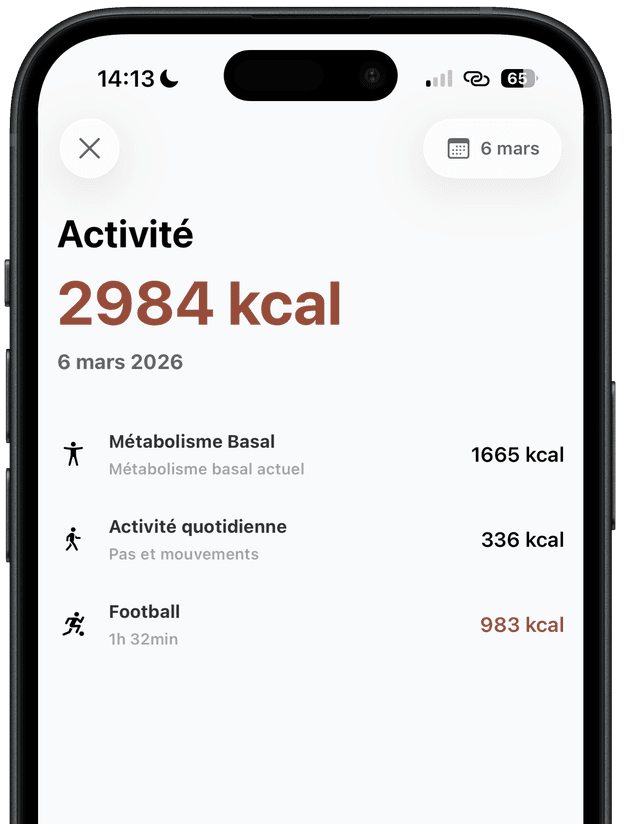
Plan your sessions and rest days with Ember
Ember helps you structure your training week by integrating recovery days tailored to your level and goals.
You might also like
View all articlesHow Many Calories Does Pilates Burn?
Calorie data by level and body weight, comparison with other activities, and tips to maximize expenditure.
How Many Calories Does Swimming Burn?
Calorie data by stroke, weight and intensity, comparison with running and cycling, tips to maximize burn.
Understanding macronutrients
Proteins, carbs, fats: learn the role of each macro and how to balance them for your goal.