Sleep and Weight: Why Rest Matters as Much as Diet
The connection between sleep quality and your weight is stronger than most people realize.
 Santé
SantéEverything You Need to Know About Sleep and Weight
Why Sleep Affects Your Weight
The connection between sleep and weight is one of the most overlooked aspects of nutrition. We tend to focus on what we eat and how much we exercise, but we forget that the quality of our rest plays an equally fundamental role in weight management.
When you sleep less than your body needs, everything goes off balance: your food cravings shift, your energy drops, and your nutritional choices suffer as a result. Studies have shown that people sleeping fewer than 6 hours per night tend to weigh more than those getting 7 to 9 hours.
This is not a coincidence. Sleep is an active biological process during which your body regulates essential hormones related to hunger, energy, and fat storage. Understanding this mechanism gives you a powerful tool for managing your weight more effectively.
Ghrelin and Leptin: Your Hunger Hormones
Two hormones play a central role in your sense of hunger: ghrelin and leptin. Ghrelin is the hormone that stimulates appetite. Leptin, on the other hand, sends your brain the signal that you are full.
The problem? Sleep deprivation directly disrupts this balance. When you sleep too little, your body produces more ghrelin and less leptin. The result: you feel hungrier, you reach satiety more slowly, and you tend to eat more, especially foods high in sugar and fat.
This is not a matter of willpower. It is a direct hormonal response to sleep deprivation. Your brain, low on energy, seeks a quick fix through food. By sleeping better, you naturally rebalance these hormones and find your appetite much easier to manage.
What Happens in Your Body While You Sleep
We often imagine sleep as a total pause for the body. In reality, it is quite the opposite. At night, your body is highly active: it repairs tissues, consolidates memory, regulates insulin levels, and releases growth hormone, which plays a key role in fat metabolism.
It is also during deep sleep that your body burns energy reserves most efficiently. Fragmented or insufficient sleep reduces the time spent in these deep phases, which can slow down these essential metabolic processes.
Furthermore, sleep deprivation promotes insulin resistance, a well-known factor in fat accumulation, especially around the abdomen. Taking care of your sleep means taking care of your insulin sensitivity and your overall metabolism.
Cortisol and Stress: The Duo That Disrupts Your Sleep
Cortisol is the stress hormone. In normal amounts, it is useful: it wakes you up in the morning, gives you energy, and helps you face the challenges of the day. But when chronic stress sets in, or when you sleep poorly, cortisol stays elevated at times when it should be declining.
High cortisol levels at night disrupt deep sleep, promote abdominal fat storage, and increase cravings for calorie-dense foods. The vicious cycle then sets in easily: stress prevents sleep, lack of sleep increases stress, and together they push weight up.
The good news is that simple habits can break this cycle. Learning to manage stress during the day, avoiding screens in the evening, and establishing a regular bedtime routine are all practical levers for lowering cortisol and recovering restful sleep.
Exercise, Sleep, and Weight: The Winning Trio
Physical exercise improves sleep quality, and sleep improves athletic performance. This is not a one-way relationship: the two reinforce each other.
When you sleep well, your muscles recover faster, your motivation to move is higher, and your workouts are more effective. Conversely, a lack of sleep reduces your physical capabilities, extends recovery times, and limits the muscle mass you can build, which slows your metabolism over the long term.
It is important, however, not to do intense exercise too late in the evening. Intense workouts release adrenaline and raise body temperature, two factors that can delay falling asleep. Prefer your intense sessions in the morning or early afternoon, and save the evening for gentle activities like walking or yoga.
Quality or Quantity: What Really Matters
We often talk about the recommended number of sleep hours, and the target of 7 to 9 hours for an adult remains a solid reference. But duration alone does not tell the whole story. Eight hours of fragmented sleep with frequent wake-ups will be far less beneficial than seven hours of continuous, deep sleep.
Sleep quality depends largely on cycles. Each night, you go through several cycles of about 90 minutes, alternating between light sleep, deep sleep, and REM sleep. It is during deep sleep that the vast majority of restorative effects occur. Reducing nighttime interruptions is therefore at least as important as increasing sleep hours.
To assess your sleep quality, ask yourself one simple question: do I feel rested and alert when I wake up? If the answer is no despite getting enough hours, it is often the quality of sleep, not the duration, that deserves your attention.
Five Practical Habits to Sleep Better and Manage Your Weight
Improving your sleep does not require turning your life upside down. A few simple adjustments, applied consistently, can make a real difference to the quality of your rest and, by extension, your weight.
The first habit to adopt: go to bed and wake up at the same time every day, even on weekends. Your biological clock loves regularity, and a stable rhythm improves the quality of deep sleep. Next, try to eat a light dinner at least 2 hours before sleeping: digesting a heavy meal disrupts sleep and raises your body temperature at the wrong time.
Also try to limit screens one hour before bed, as blue light blocks melatonin production. A cool room (around 18 degrees Celsius), dark and quiet, creates the ideal conditions for restorative sleep. Finally, avoid caffeine after 2pm: its effects last much longer than most people think.
Disclaimer
This article is provided for educational purposes only and does not constitute medical advice. The information presented aims to help you better understand the connection between sleep and weight management, but it is not a substitute for consultation with a healthcare professional.
If you experience persistent sleep disorders, unexplained weight gain, or concerning symptoms, please consult a doctor or specialist. Every situation is unique and deserves personalized support.
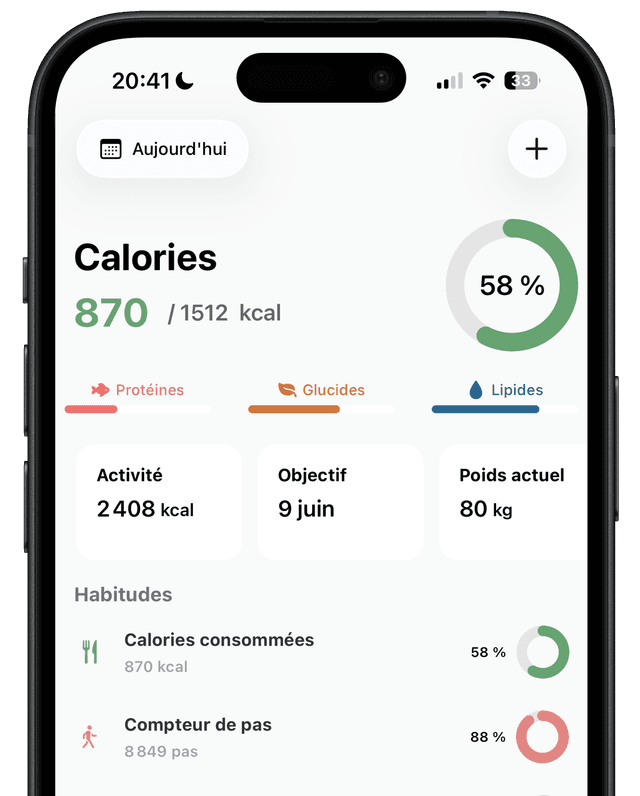
Organize Your Meals for Better Sleep
Ember helps you structure your eating windows around your natural rhythm, supporting restful sleep and sustainable weight management.
You might also like
View all articlesWater retention: understand and act
Causes, symptoms and practical solutions to reduce water retention and restore lightness and well-being.
Hydration: how much water should you drink per day?
Daily water needs, signs of dehydration, hydrating foods and practical tips to stay well-hydrated throughout the day.
Understanding macronutrients
Proteins, carbs, fats: learn the role of each macro and how to balance them for your goal.