The 5:2 Diet: Lose Weight While Eating Normally Five Days a Week
Just two days of caloric restriction per week, five days of total freedom. Discover how this popular intermittent fasting approach can fit any lifestyle without the frustration of constant dieting.
 Lifestyle
Everything you need to know about the 5:2 diet
An approach to intermittent fasting unlike any other diet
Every year, millions of people start a diet with the best intentions. After three weeks, fatigue sets in, frustration builds, and old habits creep back. This is not a lack of willpower: it is simply that continuous deprivation does not work long-term for most people.
The 5:2 diet is built on a radically different idea. Rather than counting every calorie seven days a week, you eat normally five days a week and reduce your caloric intake on just two days. These two restriction days, kept non-consecutive, create a significant weekly caloric deficit without the frustration of permanent deprivation.
This method was popularized in 2012 by British doctor and journalist Michael Mosley in his book "The Fast Diet". It belongs to the family of intermittent fasting approaches, but its flexibility sets it apart: the normal days are truly normal, with no restrictions or calorie counting required. That promise of five days of dietary freedom each week explains its lasting success with people who had given up on every traditional diet.
Five free days, two days at 500 calories: how it works in practice
The 5:2 diet works in a disarmingly simple way. Five days a week, you eat exactly as you normally would, without restricting yourself, weighing your food, or calculating anything. On the remaining two days, you reduce your total caloric intake to 500 calories for women and 600 calories for men. These figures represent roughly 25% of an average adult's daily caloric needs.
The two restriction days must be non-consecutive to give the body time to recover between periods of restriction. The most popular combinations are Monday-Thursday or Tuesday-Friday. Some people prefer to keep weekends completely free for social meals and place their restricted days in the middle of the week.
The 500 to 600 calories on restriction days can be spread freely throughout the day according to your preferences. Some opt for two small balanced meals, one in the morning and one in the evening. Others concentrate everything into a single evening meal to avoid triggering hunger too early in the day. Over the week, this double deficit amounts to roughly 3,000 to 4,000 calories saved, translating to a progressive weight loss of 300 to 500 grams per week depending on each person's basal metabolic rate.

What research says about the effects of the 5:2 diet
Studies on the 5:2 diet have multiplied since 2012, and the results are encouraging. For weight loss, a meta-analysis published in the journal Obesity Reviews examined 27 studies on intermittent fasting and concluded that discontinuous caloric restriction methods produce results comparable to a standard hypocaloric diet over the same period, with a notable advantage in long-term adherence.
Beyond the scale, the 5:2 diet acts on several important biological markers. Researchers at the University of Manchester showed that two days of caloric restriction per week improve insulin sensitivity, reduce inflammatory markers, and lower blood triglyceride levels. These metabolic health effects often exceed what is observed with equivalent continuous caloric restriction.
Another benefit frequently reported by practitioners, and documented in several studies, is an improved relationship with food. Knowing that a restriction day will be followed by five normal days completely changes the psychology of deprivation. There is never the feeling of being "on a diet forever", which significantly reduces compensatory behaviors. Sleep quality and energy levels often improve as well, largely thanks to the reduction in systemic inflammation.
What to eat on 500-calorie days to stay satisfied until evening
On restriction days, the challenge is not just staying under the 500 to 600 calorie limit. It is also about choosing foods that are truly filling, to avoid hunger pangs that would make the day unbearable. What you eat matters as much as how much.
Proteins are your best allies on fasting days. They have a high satiety value per calorie consumed, they preserve muscle mass during a caloric deficit, and they stabilize blood sugar to prevent afternoon cravings. An egg (70 kcal), grilled chicken breast (150 kcal per 100g), fat-free cottage cheese (50 kcal per 100g), or shrimp (90 kcal per 100g) are ideal options for building restriction meals without exceeding the caloric quota.
Vegetables take center stage on these days. Cucumber, zucchini, lettuce, broccoli, spinach: they are low in calories (15 to 40 kcal per 100g), rich in fiber and water, which contributes to fullness. A large plate of steamed vegetables with a light protein source makes a complete, visually generous meal for under 200 calories. Hot vegetable broths, virtually calorie-free, are also a powerful weapon against evening cravings. Good hydration throughout the day, through water, green tea, or herbal infusions, is essential for getting through these days comfortably.

How to start the 5:2 diet without giving up in the first week
The first week is usually the hardest, and that is perfectly normal. The body has not yet adapted to the restriction cycles, and hunger can be more intense than expected on 500-calorie days. Anticipating this, rather than being caught off guard by it, makes all the difference between those who quit and those who continue.
Start by choosing your two restriction days based on your actual schedule. Days with family meals, restaurant dinners, or social events are not good candidates. On the other hand, busy workdays are often ideal: mental occupation naturally cuts the urge to eat. Lock those two days into your calendar as fixed appointments for the first few weeks, so the body can adapt to a predictable rhythm.
Managing hunger during the first restriction days relies on a few simple strategies. Drinking plenty of water, tea, or herbal infusions throughout the day reduces feelings of hunger without adding calories. Delaying your first meal as late as possible mechanically shortens the perceived fasting window. After two to three weeks of regular practice, most practitioners report that restriction days become surprisingly manageable, the body having learned to function in frugal mode twice a week.
Who should not follow the 5:2 diet?
The 5:2 diet is accessible to most healthy adults, but certain profiles require careful consideration before starting. People with type 1 diabetes or taking hypoglycemic medications should not practice this method without their doctor's approval, as significant variations in caloric intake can cause dangerous hypoglycemic episodes.
Pregnant or breastfeeding women have specific and increased nutritional needs: any significant caloric restriction should be avoided in these situations. People with a history of eating disorders, including anorexia or bulimia, should avoid any form of fasting, which can reactivate problematic behaviors. If you have concerns about your ability to manage restriction days without developing an obsession with food, consult a healthcare professional before starting.
Some mild side effects are common at the start of the practice: headaches, slight irritability, difficulty concentrating on restriction days. These symptoms are generally temporary and disappear within two to three weeks. If they persist or worsen, it is a sign that you may need to adjust the method or see a doctor. Elevated chronic stress can worsen these side effects by keeping cortisol levels high during restriction phases.
Medical disclaimer
The information presented in this guide is provided for educational and informational purposes only. It does not constitute personalized medical or nutritional advice, and cannot replace a consultation with a healthcare professional.
The 5:2 diet involves significant caloric restriction that may interact with certain medical treatments or worsen pre-existing conditions. Consult a doctor or registered dietitian before starting this practice, especially if you have a chronic illness, take medication, are pregnant or breastfeeding, or have a history of eating disorders.
This information is based on data available from the ANSES (French Agency for Food, Environmental and Occupational Health Safety) and the international scientific literature on intermittent fasting.
Track your 5:2 fasting days with Ember
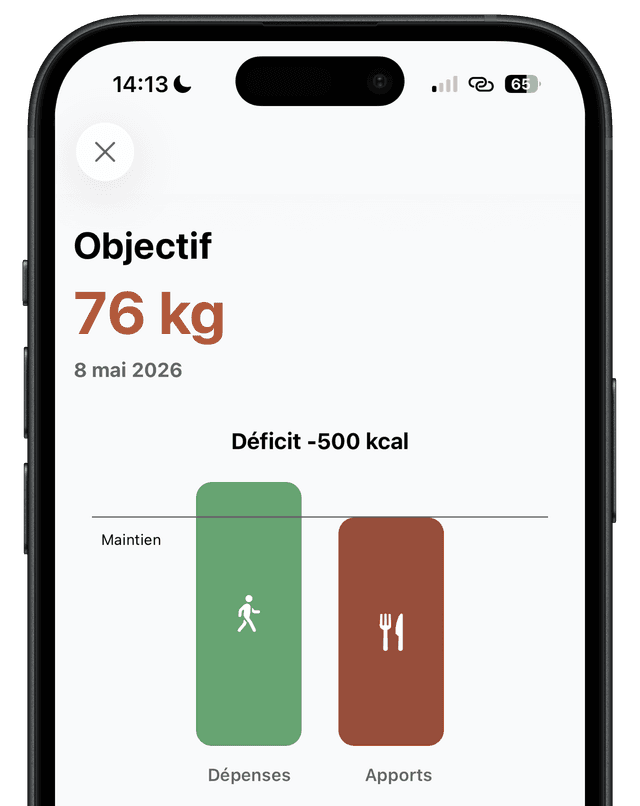
Ember helps you plan your 5:2 fasting days, track your caloric intake on restriction days, and monitor your progress week after week.
You might also like
View all articlesHow to avoid food cravings?
Hormonal, emotional or blood-sugar cravings: discover the causes and concrete strategies to control your food urges.
How to eat healthy at a restaurant: our tips
Reading the menu, choosing your dishes, avoiding traps: everything you need to eat well when dining out, without sacrificing enjoyment.
Understanding macronutrients
Proteins, carbs, fats: learn the role of each macro and how to balance them for your goal.