Basal Metabolic Rate: What Your Body Really Burns at Rest
Understanding your basal metabolic rate is the foundation of smart, sustainable weight management.
 Poids
PoidsBasal Metabolic Rate: Everything You Need to Know to Take Action
What Is Basal Metabolic Rate?
Basal metabolic rate is the energy your body burns just to stay alive, without you lifting a finger. Lying still in bed, completely motionless, your body works without rest: it keeps your heart beating, maintains your body temperature, and keeps your kidneys, liver, lungs, and billions of cells functioning. All of this requires energy, and that energy is what we call basal metabolic rate.
In practice, it accounts for 60 to 75% of your total daily energy expenditure. In other words, even if you spent the entire day doing nothing, your body would still burn a significant number of calories. This is often surprising, especially for those who think weight loss is mainly about hitting the gym.
Knowing your basal metabolic rate means understanding your energy floor: the minimum calories your body needs to function properly. Below this threshold, your body adapts and may slow down certain functions to conserve energy. That is why eating too little is never a good long-term strategy.
How to Estimate Your Basal Metabolic Rate
There is no perfect method for measuring basal metabolic rate without specialized equipment, but several formulas provide reliable estimates. The two best known are the Harris-Benedict formula, developed in the early 20th century, and the Mifflin-St Jeor formula, currently considered the most accurate for the general population.
These formulas take into account your weight, height, age, and sex. They produce a number expressed in kilocalories per day, representing what your body burns at complete rest. Multiplying this figure by a physical activity coefficient gives your total daily energy expenditure, often called TDEE (Total Daily Energy Expenditure).
In practice, for a 35-year-old man weighing 80 kg and standing 178 cm tall, basal metabolic rate sits around 1,850 to 1,900 kcal per day. For a woman of the same age, weighing 65 kg and standing 165 cm, it is around 1,400 to 1,450 kcal. These are ballpark figures: every individual is unique, and formulas are just a starting point.
It is useful to recalculate your basal metabolic rate regularly, as it changes over time. Weight loss, muscle gain, aging: each of these factors alters the calculation. Many nutrition tracking apps can do this in seconds.
What Influences Your Basal Metabolic Rate
Your basal metabolic rate is not a fixed value. It fluctuates based on numerous parameters, some of which you can influence and others you cannot.
Age is one of the most consistent factors. From around age 30, basal metabolic rate gradually decreases by about 1 to 2% per decade. This slowdown is largely due to the natural loss of muscle mass that accompanies aging, a phenomenon known as sarcopenia. It is not inevitable, but it is a reality to anticipate.
Muscle mass is the most powerful lever you can act on. Muscle tissue is metabolically active: even at rest, each kilogram of muscle burns roughly three times more calories than the same amount of fat. This is why two people of the same weight can have very different basal metabolic rates depending on their body composition.
Hormones also play a central role. The thyroid directly regulates metabolic speed through T3 and T4 hormones. An underactive thyroid (hypothyroidism) can significantly reduce basal metabolic rate, making weight loss particularly difficult despite serious dietary efforts. Finally, genetics plays a part: some people inherit a naturally more active or more efficient metabolism, but this factor is often less decisive than commonly believed.

The Slow Metabolism Myth: Reality or Excuse?
How many times have we heard someone blame weight gain on a "slow metabolism"? This explanation is convenient, but it deserves honest examination.
Measurable variations between individuals do exist. Studies have shown that basal metabolic rate can differ by 200 to 400 kcal per day between two people of similar build. Real medical conditions, such as hypothyroidism or Cushing's syndrome, can genuinely slow metabolism significantly.
However, in the vast majority of cases, differences in basal metabolic rate between healthy individuals are far more modest than people imagine. Individual variability in basal metabolic rate, at equal body composition, is only around 8 to 10%.
What influences weight far more is total energy expenditure, which includes not just basal metabolic rate but also deliberate physical activity, the thermic effect of food (energy spent digesting), and NEAT (Non-Exercise Activity Thermogenesis): all the small daily activities like walking, fidgeting, and climbing stairs. These components vary far more than basal metabolic rate itself, and most are within your direct control.
How to Increase Your Basal Metabolic Rate
Good news: basal metabolic rate is not fixed, and several strategies can contribute to increasing it durably.
The first, and by far the most effective, is to build muscle mass. Strength training, even practiced two to three times per week, gradually increases the proportion of active tissue in your body. The more muscle you have, the more calories your body burns at rest. The effects are not dramatic over a single week, but over several months, the impact is real and measurable.
Protein intake also plays a key role. Proteins have a higher thermic effect than carbohydrates or fats: your body spends roughly 20 to 30% of protein calories just to digest and absorb them, compared to 5 to 10% for carbohydrates and only 0 to 3% for fats. Consuming enough protein, around 1.2 to 2 g per kilogram of body weight, helps maintain muscle mass and support metabolism.
Sleep is often the overlooked factor. Chronic sleep deprivation raises cortisol and reduces the production of testosterone and growth hormone, two hormones essential for muscle mass maintenance. Getting enough sleep is not a luxury: it is a basic condition for a healthy metabolism.
Finally, do not underestimate NEAT. Choosing stairs over the elevator, walking during phone calls, standing up regularly: these micro-activities can add several hundred extra kilocalories per day.
Intermittent Fasting and Metabolic Rate: What Science Says
A question that comes up often is whether intermittent fasting slows metabolism. It is a legitimate concern, but current research provides reassuring answers.
Short-term studies show that fasting periods of up to 72 hours do not cause a significant drop in basal metabolic rate. On the contrary, a slight temporary increase is observed, likely linked to the release of norepinephrine which stimulates fat mobilization. This counterintuitive phenomenon reflects an evolutionary logic: a body that is not eating needs to be alert to find food.
What can actually slow metabolism is severe and prolonged caloric restriction combined with muscle mass loss. This is the well-known yo-yo effect: by eating very little for extended periods, the body adapts by reducing energy expenditure and breaking down muscle to produce energy. Intermittent fasting, practiced correctly and combined with adequate protein intake, limits this risk because it preserves muscle mass better than continuous caloric restriction.
Intermittent fasting also acts favorably on insulin resistance and insulin sensitivity, two factors that indirectly influence body composition and therefore basal metabolic rate over time. By reducing frequent insulin spikes, fasting periods allow the body to better use its fat reserves as an energy source.
Disclaimer
The information presented in this article is provided for educational and informational purposes only. It does not constitute medical advice and does not replace consultation with a qualified healthcare professional.
If you suspect a thyroid, hormonal, or metabolic disorder, consult your doctor before making any dietary or exercise changes. Intermittent fasting is contraindicated in certain situations: pregnant or breastfeeding women, people with type 1 diabetes, hypoglycemia, or a history of eating disorders. Basal metabolic rate calculation formulas are estimates and do not replace an individualized medical assessment.
Track Your Nutrition in Line with Your Metabolism
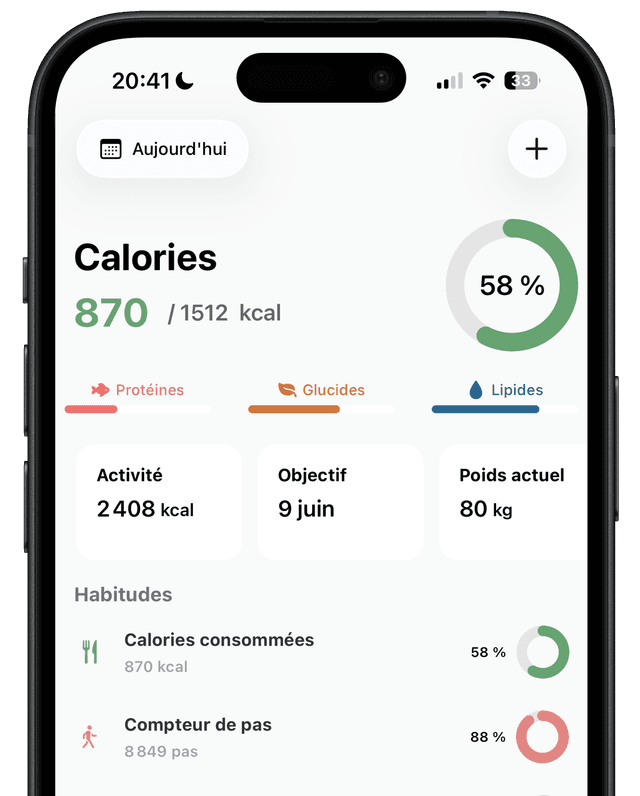
Ember helps you structure your meals within a time window suited to your metabolism through intermittent fasting.
You might also like
View all articlesCaloric deficit explained
Understand how to create a healthy, sustainable caloric deficit to lose weight without frustration.
Visceral Fat: Understanding and Eliminating Dangerous Fat
Discover what visceral fat is, why it's more dangerous than visible fat, and how to eliminate it effectively.
Understanding macronutrients
Proteins, carbs, fats: learn the role of each macro and how to balance them for your goal.