Weightlifting vs Cardio: Which Is Better for Weight Loss?
Calorie burn, afterburn effect, basal metabolic rate, and body composition: everything you need to choose your weight loss strategy.
 Fitness
The Complete Guide: Weightlifting vs Cardio for Weight Loss
A Debate That Has Divided Fitness Enthusiasts for Decades
The debate between weightlifting and cardio for weight loss is one of the most common in gyms. On one side, cardio enthusiasts claim that running and cycling are the best allies for weight loss. On the other, weightlifting fans argue that building muscle is the key to burning fat in the long run. The reality is more nuanced than this binary opposition.
Both disciplines offer distinct advantages depending on the time frame considered. Cardio wins on immediate calorie burn: one hour of running at 10 km/h burns between 500 and 700 kcal depending on body weight, compared to 200 to 400 kcal for an hour of weightlifting. But weightlifting creates a lasting metabolic advantage: each extra kilogram of muscle increases resting calorie expenditure by 10 to 15 kcal per day, and the afterburn effect (EPOC) can extend fat burning for 24 to 48 hours after an intense session.
Understanding these mechanisms allows you to build a strategy aligned with your goal, whether it is losing weight quickly, preserving muscle mass during a diet, or improving body composition over the long term.
Cardio: High Immediate Calorie Burn
In terms of calories burned during exercise, cardio is hard to beat. One hour of running at 10 km/h burns approximately 600 to 650 kcal for a 70 kg person, based on MET values from the ACSM Compendium. Vigorous cycling burns between 500 and 600 kcal/h, vigorous swimming between 500 and 650 kcal/h, and jump rope can exceed 700 kcal/h. These numbers are significantly higher than a typical weightlifting session, which ranges from 200 to 400 kcal/h depending on intensity and rest periods.
Cardio directly engages the cardiovascular system, improving lung capacity, lowering blood pressure, and strengthening heart health. For weight management, 150 minutes of moderate-intensity cardio per week, the WHO recommendation, represents an additional expenditure of approximately 1,200 to 1,500 kcal per week for a 70 kg adult.
The limitation of cardio alone lies in what researchers call lean mass loss. When combining a significant caloric deficit with only cardio, the body draws not only from fat stores but also from muscle protein. A study published in *Obesity Reviews* found that a cardio-only program led to muscle mass loss representing 20 to 30 % of total weight lost, compared to less than 5 % with a combined cardio and weightlifting program.

Weightlifting: The Engine of Basal Metabolic Rate
Weightlifting acts on a different lever than cardio: basal metabolic rate, meaning the calories your body burns at rest to maintain vital functions. Muscle tissue is metabolically active: each kilogram of muscle consumes approximately 10 to 15 kcal per day at rest, compared to only 4 to 5 kcal for a kilogram of adipose tissue. Over a full day, a body with 10 extra kilograms of muscle mass will burn between 100 and 150 additional kcal with no conscious effort.
This advantage accumulates over time. In one year, 100 extra kcal per day adds up to 36,500 kcal, equivalent to approximately 4 to 5 kg of fat. This is the central argument of weightlifting advocates: even on rest days, your body works for you if you have invested in building muscle.
Weightlifting also provides a crucial advantage during dieting phases. When you reduce caloric intake, the body enters a catabolic state where it may break down muscle to produce energy. A weightlifting program 2 to 3 times per week during a diet preserves up to 95 % of existing muscle mass, according to a meta-analysis published in *Sports Medicine*, whereas cardio alone does not provide this anabolic muscle-preservation signal.

The EPOC Effect: Calories Burned After Exercise
One of the most compelling arguments in favor of weightlifting is the EPOC effect (Excess Post-exercise Oxygen Consumption), also known as the afterburn effect. After an intense weightlifting session, the body must restore oxygen reserves, rebuild damaged muscle fibers, clear accumulated lactate, and re-balance its core temperature. All these recovery operations consume energy for hours after the workout ends.
Studies on EPOC show that an intense weightlifting session can elevate metabolism for 24 to 48 hours, with an estimated additional expenditure of 100 to 200 kcal over this recovery window. Steady-state cardio also generates an EPOC effect, but a shorter one: approximately 30 to 60 extra kcal after an hour of jogging, compared to 60 to 180 kcal after a heavy weightlifting session.
HIIT (high-intensity interval training) combines the advantages of both: it generates a high calorie burn during exercise, similar to cardio, and a prolonged EPOC effect comparable to weightlifting. A study published in the *Journal of Strength and Conditioning Research* found that 20 minutes of HIIT produced a 50 % greater EPOC than 40 minutes of steady-state cardio at equivalent total calorie expenditure.
Body Composition: Beyond the Number on the Scale
Body composition is a more precise concept than simple bodyweight. Two people weighing 70 kg can have very different bodies: one may have 30 % body fat (21 kg of fat, 49 kg of lean mass) while the other has 15 % body fat (10.5 kg of fat, 59.5 kg of lean mass). On the scale, they weigh the same. In terms of physique and metabolic health, they are entirely different.
Weightlifting is the only activity capable of acting on both components simultaneously: reducing fat mass and increasing muscle mass. This phenomenon, called body recomposition, is especially pronounced in beginners and overweight individuals, in whom the anabolic window is wider.
Cardio practiced alone leads to weight loss that may include fat, muscle, and water, without a favorable change in the lean mass to fat mass ratio. This is why many people who exclusively practice cardio lose weight on the scale without seeing a significant change in their physique. Weightlifting, by preserving or developing muscle mass, shifts this ratio more favorably, creating a leaner body even at a stable weight.
The Real Answer: Combine Both
The answer to the question "weightlifting or cardio?" is not one or the other, it is both. The most robust studies consistently show that combined programs mixing weightlifting and cardio produce superior results to either discipline practiced alone.
A meta-analysis published in the *British Journal of Sports Medicine* covering 140 studies concluded that the weightlifting and cardio combination reduced fat mass by 28 % more than a cardio-only program, and 36 % more than a weightlifting-only program over 12 weeks. In addition, the combination preserved 95 % of muscle mass during weight loss, compared to 70 to 80 % for cardio alone.
The optimal split depends on your goal. To lose weight quickly, a 60 % cardio and 40 % weightlifting split across 4 sessions per week maximizes calorie burn while preserving muscle. To improve body composition over the long term, the reverse (60 % weightlifting, 40 % cardio) optimizes muscle gains and EPOC. Combining this approach with intermittent fasting creates a favorable hormonal context, with low insulin during the fasting window facilitating fat mobilization at training time.
Frequently Asked Questions
Does weightlifting cause weight gain at first? Not in terms of fat. Some people notice a slight temporary weight gain (1 to 2 kg) at the start of a program, explained by water retention in stressed muscle fibers and additional glycogen storage in the muscles. This temporary weight gain is not fat and disappears or transforms into visible physique improvement within 4 to 6 weeks.
How many sessions per week to see results? Most studies on body composition converge on a minimum frequency of 3 sessions per week, spread across non-consecutive days to allow muscle recovery. The ideal for a beginner looking to lose weight is 2 weightlifting sessions and 2 cardio sessions per week, with at least one full rest day.
Should you do cardio before or after weightlifting? If you perform both in the same session, the ACSM recommendation is to start with weightlifting and finish with cardio. This sequence preserves glycogen reserves for intense muscular effort, which needs them most, and uses cardio to burn fat in a state where sugar reserves are partially depleted.
Does intermittent fasting improve athletic results? Yes, according to several recent studies. During the fasting window, insulin is low and growth hormone levels are higher, which promotes lipolysis. Training at the end of the fasting window, meaning 2 to 3 hours before breaking the fast, can amplify lipid expenditure by 10 to 20 % according to some studies.
Disclaimer
The information presented in this guide is provided for educational and informational purposes only. It does not constitute personalized medical advice and cannot replace consultation with a healthcare professional, sports medicine physician, or certified coach.
Consult your doctor before starting an intensive training program, especially if you have cardiovascular history, joint or musculoskeletal issues, or are significantly overweight. Weightlifting with loads places significant stress on joints and requires correct technique to avoid injury.
The caloric figures and percentages cited in this guide are based on studies published in peer-reviewed scientific journals, including the *British Journal of Sports Medicine*, *Obesity Reviews*, *Sports Medicine*, and the *Journal of Strength and Conditioning Research*, as well as recommendations from the ACSM and the WHO. These data are averages from studied populations and may vary significantly between individuals based on their fitness level, age, and physiological characteristics.
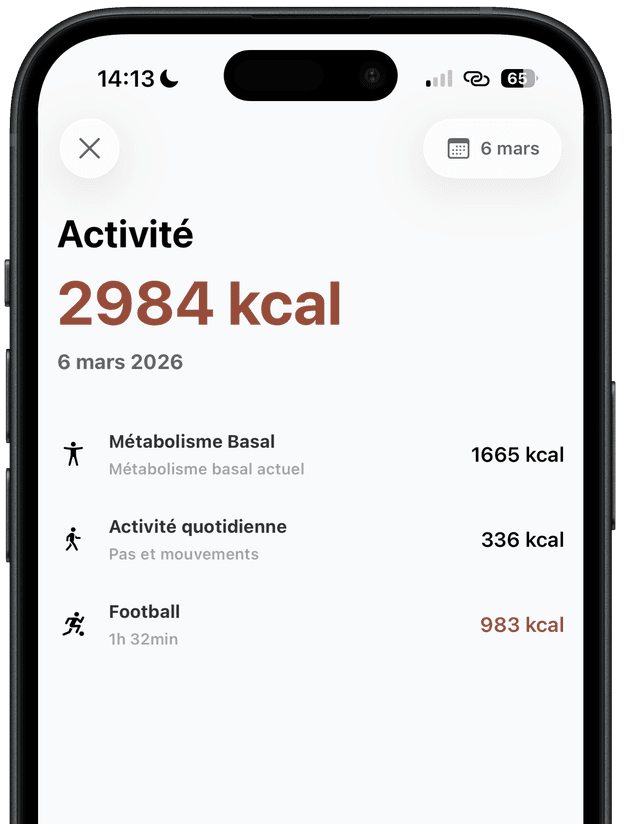
Track Your Workouts with Ember
Log your training sessions and visualize your progress toward your goals with Ember.
You might also like
View all articlesHow Many Calories Does Pilates Burn?
Calorie data by level and body weight, comparison with other activities, and tips to maximize expenditure.
How Many Calories Does Swimming Burn?
Calorie data by stroke, weight and intensity, comparison with running and cycling, tips to maximize burn.
Understanding macronutrients
Proteins, carbs, fats: learn the role of each macro and how to balance them for your goal.