Walk 10,000 Steps a Day: How Much Weight Will You Lose in a Month?
Walking is one of the most accessible activities there is. But between the promise and the reality, how many kilos can you actually expect to lose by walking 10,000 steps every day?
 Fitness
Everything You Need to Know About Walking and Weight Loss
What Do 10,000 Steps Actually Mean?
Ten thousand steps a day has become something of a wellness mantra, repeated everywhere since the 1960s. But concretely, what does it actually represent? For most adults, 10,000 steps correspond to roughly 7 to 8 kilometers covered. Walking at a moderate pace of about 5 km/h, you will need between 70 and 90 minutes to complete them.
On the calorie side, estimates vary widely depending on your weight, pace, and terrain. A person weighing 70 kg will burn on average 300 to 400 kcal walking those 10,000 steps. A heavier person, around 90 kg, may approach 450 to 500 kcal. These figures include the calories you would have burned at rest anyway, so the net expenditure attributable to walking is slightly lower than these totals.
That is not nothing, but it is not an astronomical amount either. This realism is what allows you to build honest expectations about what walking can actually do for you.
The Math: From Calories to Body Fat
To understand weight loss through walking, you first need to grasp a fundamental principle: one kilogram of body fat represents approximately 7,700 kcal. That is the amount of energy your body needs to draw from its fat stores to eliminate that kilogram.
If you burn an extra 350 kcal per day through your 10,000 steps, and you do not compensate by eating more, you create a daily caloric deficit of roughly 350 kcal. Over a 30-day month, that adds up to a total deficit of 10,500 kcal.
Divide that by 7,700, and you get approximately 1.36 kg of fat. But keep in mind: the actual weight loss shown on the scale also includes fluctuations in water retention, muscle mass, and digestive content. The number you see each morning can therefore vary well beyond these calculations.
How Much Weight Can You Realistically Lose in a Month?
Staying within a realistic range, someone who walks 10,000 steps every day without changing their diet can expect to lose between 0.5 and 1.5 kg per month, depending on their starting weight, metabolism, and consistency.
If that same person combines their daily 10,000 steps with a slight dietary caloric deficit, for example by cutting an additional 200 to 300 kcal from meals, results can reach 1.5 to 2.5 kg per month. That is a healthy range that preserves muscle mass and establishes lasting habits.
Some articles promise 5 kg or more in a month with 10,000 steps. Those figures are not realistic for the vast majority of people, except under very specific conditions like significant excess weight combined with a very strict diet. It is better to aim for modest, sustainable goals than to feel discouraged by unrealistic expectations.
The Factors That Make All the Difference
The number of calories burned while walking is not a fixed figure. It depends on several important variables. Your body weight is the primary factor: the heavier you are, the more energy you expend to move your body the same distance.
Your pace also plays a role. Walking at 6 km/h burns significantly more than strolling at 3 km/h. Terrain matters too: an hour in the hills or on sand engages far more muscles than a flat sidewalk walk. And of course, consistency is decisive: 10,000 steps five days out of seven will yield very different results from 10,000 steps every single day without exception.
But the most powerful factor of all remains diet. If every walk is followed by a little food reward, the caloric benefits evaporate quickly. Walking works best when it fits into an overall balanced lifestyle, not as a compensation ticket for overindulgence.

How to Maximize Your Results
Walking alone can produce satisfying results, but it reaches its full potential when combined with an adapted diet. One of the most effective approaches is to practice intermittent fasting alongside your walks: walking in the morning in a fasted state, for example, encourages the body to draw more heavily from its fat reserves, since insulin levels are low after a night without food.
Progressively increasing the intensity of your walks is also worth exploring. Adding some hills, picking up the pace on certain stretches, or carrying a light backpack can increase your caloric expenditure by 15 to 25 % without major additional effort.
Finally, try not to spend the rest of the day sitting after your 10,000 steps. NEAT (Non-Exercise Activity Thermogenesis), which refers to all the small caloric expenditures linked to daily movements outside formal exercise, represents an important share of your total metabolism. Staying active throughout the day considerably amplifies the effect of your walks.

Common Mistakes to Avoid
The first mistake is overestimating calories burned. Apps and smartwatches tend to inflate the numbers. A simple rule: assume your device overestimates by about 20 percent and plan accordingly. This avoids the temptation to reward yourself with extra dessert after every outing.
The second mistake is ignoring unconscious food compensation. Studies have shown that many people eat more on days when they exercise, often without realizing it. This phenomenon cancels out a portion of the caloric benefits and can even lead to slight weight gain if you are not paying attention.
Finally, many people expect spectacular results within two weeks, then give up out of disappointment. Walking is a long-game tool, not a quick shortcut. The real benefits, whether for weight, cardiovascular health, or mental well-being, are built over weeks and months of consistency.
Disclaimer
The information presented in this article is provided for educational and informational purposes only. It does not constitute personalized medical or nutritional advice. Caloric calculations and weight loss estimates are approximations based on average data and may vary considerably between individuals. Please consult a healthcare professional or nutritionist before starting any weight loss program, particularly if you have pre-existing medical conditions.
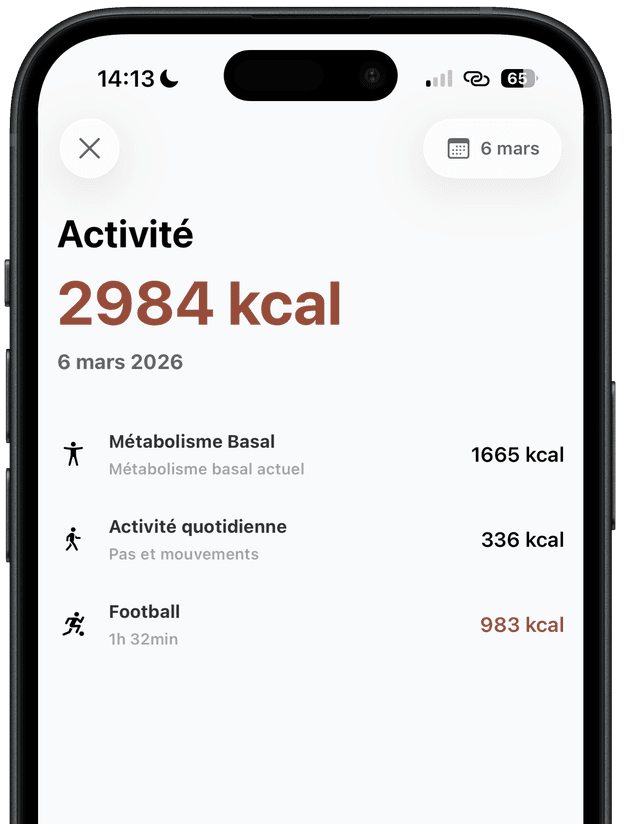
Combine Walking and Intermittent Fasting with Ember
Ember helps you pair your walking habits with an optimal eating window to maximize your weight loss results.
You might also like
View all articlesHow Many Calories Does Pilates Burn?
Calorie data by level and body weight, comparison with other activities, and tips to maximize expenditure.
How Many Calories Does Swimming Burn?
Calorie data by stroke, weight and intensity, comparison with running and cycling, tips to maximize burn.
Understanding macronutrients
Proteins, carbs, fats: learn the role of each macro and how to balance them for your goal.