16:8 Fasting: The Complete Guide to Get Started
The 16:8 method is the world's most practiced intermittent fasting protocol. Here's everything you need to know to understand it, start it, and get the most out of it.
 Lifestyle
Everything you need to know about 16:8 fasting
What exactly is 16:8 fasting?
A few years ago, going 16 hours without eating would have been seen as a drastic diet reserved for extreme athletes. Today, millions of people around the world practice this method daily, often without seeing it as a constraint at all. The 16:8 protocol has become the most popular form of intermittent fasting, and for one simple reason: it fits real life.
The principle is refreshingly clear. The day is divided into two blocks: a 16-hour fasting window during which no calories are consumed, and an 8-hour eating window during which you eat normally. Despite what its name might suggest, this is not a strict diet with forbidden foods. It's primarily a question of timing.
The 16:8 method belongs to the broader family of intermittent fasting, which encompasses several protocols alternating periods of restriction and eating windows. What sets 16:8 apart is that a large portion of the fasting period happens during sleep. In practice, if you finish dinner at 8 PM and skip breakfast to eat lunch at noon, you've already completed 16 hours of fasting without any particular effort.
What science says about 16:8
To understand why 16:8 works, you need to go back to a fundamental mechanism: insulin regulation. With every meal, the pancreas releases insulin to allow cells to absorb glucose. As long as insulin is elevated, the body stores energy and lipolysis, the breakdown of fat, is blocked. Approximately 4 to 6 hours after the last meal, insulin returns to its baseline level. That's when the body truly begins drawing on its fat reserves.
After about 12 hours of fasting, several processes accelerate. Insulin levels remain low, which promotes fatty acid oxidation. Researchers at the University of California demonstrated that restricting the eating window to 8 hours was enough to significantly improve insulin sensitivity in overweight participants, independent of any qualitative dietary change.
After approximately 14 to 16 hours of fasting, another mechanism kicks in: autophagy. This cellular process, which earned Yoshinori Ohsumi the 2016 Nobel Prize in Medicine, involves cells recycling their damaged components. Often described as cellular housekeeping, autophagy is associated with improved metabolic health and slower cellular aging. This is one of the reasons why 16:8, which pushes right to this 16-hour threshold, is particularly valued by researchers.

The documented benefits of 16:8 fasting
Weight loss is often the first reason people turn to 16:8, and the results are real. Several meta-analyses have shown that intermittent fasting with a restricted eating window allows for fat loss comparable to traditional calorie restriction, with a significant advantage: less sense of deprivation. For most practitioners, naturally reducing the number of meals leads to a spontaneous reduction in calorie intake of around 15 to 20 percent, without counting a single calorie.
Beyond weight, the effects on metabolic health are well documented. A study published in the New England Journal of Medicine in 2019 highlighted that intermittent fasting improved several cardiovascular health markers, including blood pressure, LDL cholesterol levels, and fasting blood glucose. These benefits are partly explained by the reduction in systemic inflammation associated with chronically elevated insulin levels.
Improved energy and mental clarity are effects frequently reported by 16:8 practitioners, and they aren't purely subjective. During fasting, the body produces ketone bodies from fat, which serve as a particularly efficient fuel for the brain. This partial energy transition can explain the sharper thinking sensation many people describe after a few weeks of regular practice. If your goal also includes managing your calorie deficit, 16:8 can be a natural and effortless tool for doing so.
How to start 16:8 without making mistakes
The biggest beginner mistake is jumping straight to 16 hours of fasting without any transition. The body, accustomed to receiving energy at regular intervals, needs time to adapt. A gradual approach is far more effective: start with a 12-hour fasting window, then extend it by one hour each week until you reach 16 hours. This progressive ramp-up avoids intense hunger spikes, headaches, and energy crashes that are often associated with a sudden start.
During the first weeks, hydration is absolutely central. Water, black coffee, tea, and herbal infusions are allowed during the fasting window without interrupting its metabolic effects. Drinking regularly helps reduce the sensation of hunger, which is often confused with thirst. Good hydration also eases the body's adaptation to this new rhythm.
Another often-overlooked point: the quality of what you eat during the eating window. 16:8 is not a license to eat anything for 8 hours. Practitioners who get the best results are those who continue to prioritize protein-rich, fiber-rich, and healthy-fat foods. To avoid intense cravings during fasting hours, structuring your meals around high-satiety foods is essential. Our guide on how to avoid cravings offers concrete strategies for achieving this.

Which eating window should you choose?
The ideal eating window doesn't exist universally: it depends on your lifestyle, work schedule, family meals, and personal preferences. What matters is consistency. An imperfect protocol that's maintained long-term will always outperform a perfect protocol abandoned after ten days.
The two most commonly practiced windows are 12 PM to 8 PM and 1 PM to 9 PM. The first is ideal for those who prefer early dinners and have no evening social obligations. The second suits those whose professional or family dinners tend to run later. In both cases, breakfast is replaced by lunch, which fits naturally into a standard working day.
Recent research suggests that placing the eating window earlier in the day, for example between 10 AM and 6 PM, offers greater metabolic benefits. The body processes carbohydrates more efficiently earlier in the day, and insulin levels are naturally more responsive in the morning. However, this approach is often difficult to reconcile with a normal social life, particularly family dinners. The most important thing is to choose a window you can maintain consistently, without creating additional stress whose negative effects on weight are well documented.
Exercise and 16:8 fasting: what you need to know
This question consistently comes up among active people: can you exercise during 16:8 fasting? The answer depends on the type, intensity, and timing of your session. For moderate efforts like brisk walking, gentle cycling, or a yoga session, fasting is not an obstacle and can even amplify fat burning. For more intense efforts, things get more complex.
During high-intensity training, the body needs glycogen, a fuel derived from carbohydrates. In a state of advanced fasting, glycogen stores may be lower, which risks degrading performance and increasing muscle fatigue. This is why athletes and regular strength trainers often prefer to schedule their workouts just before the end of their fasting window, or at the start of their eating window, so they can refuel immediately after. Our article on exercising while fasting covers these mechanisms in depth.
The body's adaptation to 16:8 also plays an important role. The first few weeks can be physically challenging if you continue training at the same intensity. After a month of regular practice, most practitioners find that their body has adapted and their performance has returned to its usual level, or even improved on certain markers like endurance. Patience is, here too, the cornerstone of the protocol.
Key takeaways
The 16:8 protocol is far more than a trend: it's a method grounded in a solid understanding of human physiology that helps the body naturally regulate insulin, mobilize fat stores, and trigger cellular regeneration processes. Its benefits for weight, metabolic health, and energy are documented across numerous serious studies. It doesn't replace a balanced diet, but it creates biological conditions favorable to better weight management and overall health. Its success rests on three simple principles: a gradual transition, choosing an eating window that fits your lifestyle, and staying well hydrated throughout the day.
Medical disclaimer: The information in this article is for educational purposes only. It does not constitute medical advice and does not replace consultation with a healthcare professional. The 16:8 protocol is not recommended for pregnant or breastfeeding women, people with diabetes, eating disorders, or those taking medications requiring regular food intake. If in doubt, consult your doctor before changing your eating routine.
Track your 16:8 fasting with Ember
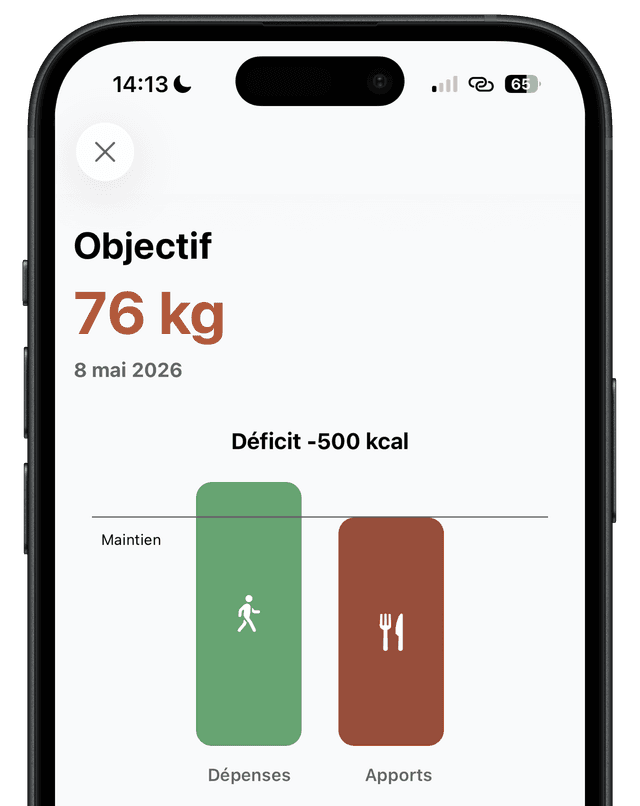
Ember lets you set your fasting window, receive personalized reminders, and track your progress day by day. Start your first 16:8 fast tonight.
You might also like
View all articlesHow to avoid food cravings?
Hormonal, emotional or blood-sugar cravings: discover the causes and concrete strategies to control your food urges.
How to eat healthy at a restaurant: our tips
Reading the menu, choosing your dishes, avoiding traps: everything you need to eat well when dining out, without sacrificing enjoyment.
Understanding macronutrients
Proteins, carbs, fats: learn the role of each macro and how to balance them for your goal.