Nutrition · March 5, 2026 · 5 min read
How to prepare a low-calorie breakfast
Pleasure, satiety, and lightness: the right choices to start your day.
The complete guide to low-calorie breakfasts
Why choose a lighter breakfast
A low-calorie breakfast does not mean an insufficient meal, it means a meal designed to deliver between 300 and 400 kcal, roughly 15 to 20% of a moderately active adult’s daily energy intake, by prioritizing high-satiety foods over calorie-dense ones that offer little nutritional return.
Every morning, the body comes out of an 8-to-10-hour overnight fast. Blood glucose is low and cortisol is at its daily peak, a window where food choices directly shape glycemia for the rest of the day. A meal high in fast sugars triggers an insulin spike followed by a blood sugar crash around 10–11 a.m., causing fatigue and cravings. A meal balanced in proteins, fiber, and complex carbohydrates keeps blood glucose stable for 3 to 4 hours.
The goal is not to deprive yourself, but to choose satiating foods with a moderate calorie density, foods rich in water, fiber, and protein that trigger satiety signals (leptin, cholecystokinin) without overloading the day’s energy budget.
Key benefits
Research on weight management consistently shows that a balanced breakfast reduces total daily caloric intake by 10 to 15%, not metaphorically, but because protein and fiber slow gastric emptying and prolong satiety. A study published in *Obesity* found that participants who ate a high-protein breakfast (35 g of protein) consumed 441 fewer calories over the rest of the day compared to those who skipped the morning meal.
In the morning, insulin sensitivity is naturally higher than in the evening, meaning the body handles a moderate amount of complex carbohydrates more efficiently at this time of day. Conversely, a sharp glycemic spike, caused by sugary cereals or white toast with jam, rapidly depletes this sensitivity and sets the stage for compulsive snacking by mid-morning. The combination of protein + fiber + low-GI carbohydrates is the most effective formula for breaking this cycle.
3 low-calorie breakfast ideas
A vegetable omelet on whole-grain toast is one of the most satisfying breakfasts for its calorie count. Two whole eggs provide 12 g of protein and 140 kcal; one slice of whole-grain bread adds 70 kcal and 2 g of fiber; a handful of sautéed vegetables (zucchini, spinach, mushrooms) brings the total to approximately 320 kcal. The protein in eggs triggers the release of cholecystokinin, a hormone that signals satiety to the brain for 3 to 4 hours.
Oat porridge with fresh fruit is the benchmark option for blood sugar stability. 50 g of rolled oats (GI 55) cooked in 200 ml of unsweetened almond milk deliver around 220 kcal; add a handful of blueberries (40 kcal, 4 g of fiber) and a teaspoon of cinnamon for a total of 270 kcal. The beta-glucan in oats forms a viscous gel in the intestine that slows glucose absorption and reduces the glycemic peak by 20 to 30%.
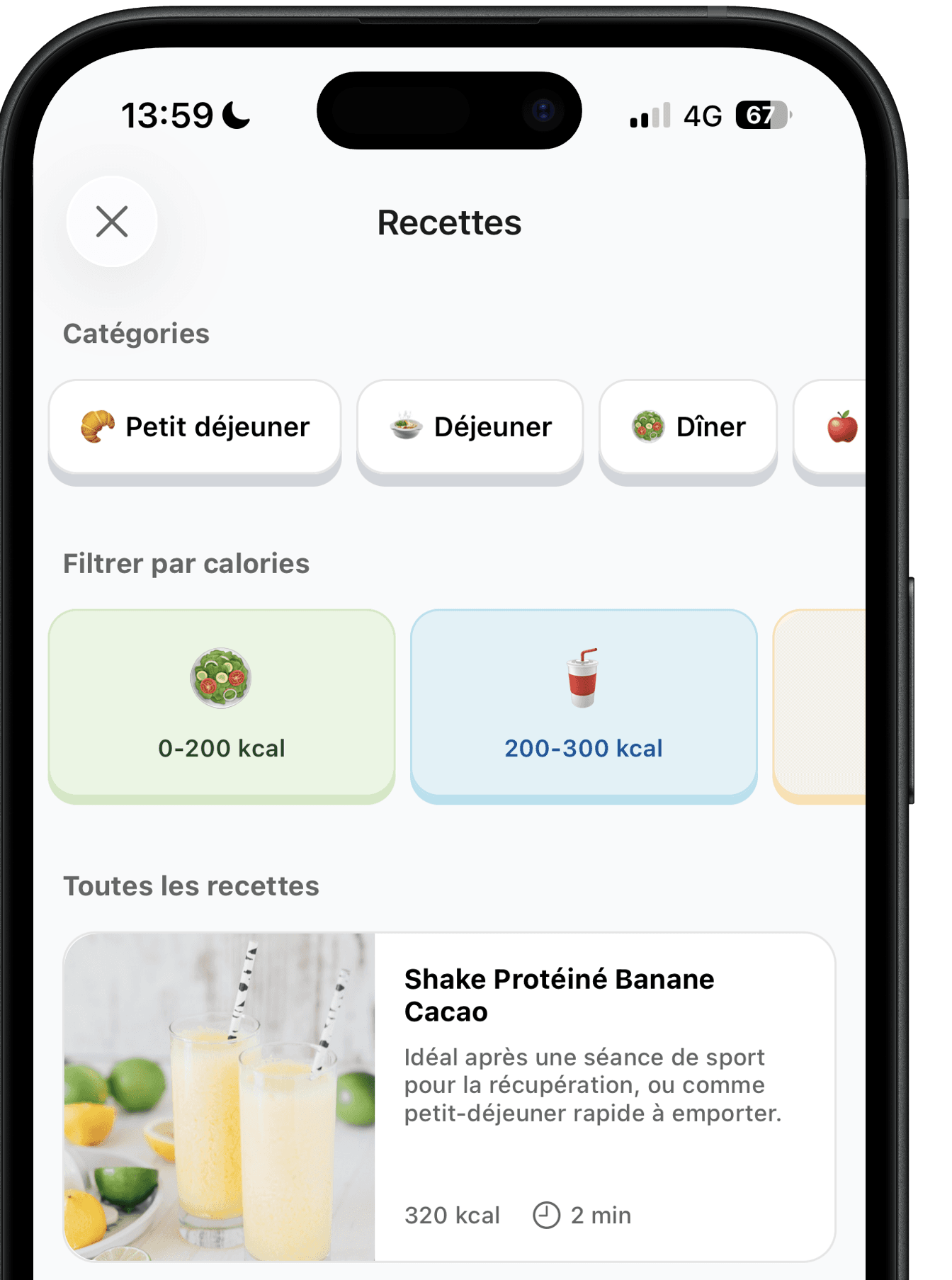
A spinach-banana protein smoothie works well on mornings when appetite is low. 200 ml of unsweetened soy milk, half a banana, a large handful of fresh spinach, and 100 g of 0% Greek-style fromage blanc deliver 300 kcal, 22 g of protein, and 4 g of fiber. This combination prevents the 10 a.m. energy dip while staying light and quick to prepare.
Foods to prioritize
Eggs and lean protein sources are the cornerstone of a low-calorie breakfast. A whole egg provides 6 g of protein for only 70 kcal, while 0% fromage blanc or skyr offers 10 to 12 g of protein for 80 to 100 kcal per 150 g serving. Protein is the most satiating macronutrient: it reduces ghrelin (the hunger hormone) levels more effectively than carbohydrates or fats.
Whole grains with a moderate glycemic index, rolled oats (GI 55), whole-grain sourdough (GI 54), rye bread (GI 50), release energy progressively thanks to their fiber content. Unlike puffed cereals or white bread (GI 70–85), they maintain stable blood glucose for 2 to 3 hours. A portion of 40 to 50 g of oats or one slice of whole-grain bread is sufficient.
Fresh fruits with a lower sugar content, blueberries (7 g sugar/100 g), strawberries (6 g), kiwis (9 g), grapefruit (7 g), provide fiber, vitamin C, and antioxidants for just 30 to 50 kcal per 100 g serving. Unsweetened plant milks (almond: 15 kcal/100 ml, soy: 33 kcal/100 ml, unsweetened oat: 35 kcal/100 ml) reduce caloric intake compared to whole milk (65 kcal/100 ml) while adding volume and flavor.
Foods to limit
Croissants and industrial pastries are the first items to avoid: a standard butter croissant weighs 60 to 80 g and provides 280 to 360 kcal, including 15 to 20 g of saturated fat and 20 to 25 g of high-GI carbohydrates. It provides little satiety and triggers a sharp glycemic spike followed by a rapid crash.
Sugary breakfast cereals (chocolate corn flakes, industrial muesli) contain 25 to 40 g of sugar per 60 g serving, the equivalent of 6 to 10 sugar cubes before even adding milk. Their glycemic index frequently exceeds 70, making them one of the worst morning choices for blood sugar management. Industrial fruit juices contain as much sugar as a soda, a 200 ml glass of commercial orange juice delivers 20 to 25 g of sugar with none of the fiber of the whole fruit, triggering a glycemic spike within 20 minutes. Finally, high-sugar spreads like chocolate-hazelnut pastes reach 57% sugar content: just two tablespoons already represent 22 g of added sugar.
Balance comes first
An effective low-calorie breakfast depends on a balanced macronutrient distribution. The ideal formula for this meal is 30% protein (25 to 30 g on a 350 kcal total), 40% complex carbohydrates (35 to 40 g, from whole grains or fruit), and 30% quality fats (12 to 15 g, from eggs, nuts, or avocado). This distribution maximizes satiety while limiting insulin spikes.
Quality fats play an often-underestimated role at breakfast: a small handful of walnuts (15 g, 90 kcal) or a quarter of an avocado (50 g, 80 kcal) slows gastric emptying and extends the feeling of fullness by 30 to 60 additional minutes compared to a fat-free meal. To learn how to balance your macronutrients across the full day, see our
FAQs
How many calories should I target at breakfast? For an adult with a 2,000 kcal daily intake, a low-calorie breakfast falls between 300 and 400 kcal. Those practicing 16/8 intermittent fasting who push their first meal later may target 400 to 450 kcal to compensate. As a general rule, breakfast should not exceed 20% of total daily intake.
Should I skip breakfast to lose weight? Not necessarily. Intermittent fasting can be effective, but skipping breakfast without a strategy often leads to overcompensating at lunch and dinner, canceling out the initial deficit. If you’re not hungry in the morning, a light 200 to 250 kcal meal is sufficient, forcing a large breakfast provides no additional benefit.
Which plant milks should I choose? Always opt for unsweetened versions: unsweetened almond milk contains 15 kcal/100 ml (versus 50 kcal for the sweetened version), unsweetened soy milk 33 kcal, unsweetened oat milk 35 kcal. Even unsweetened oat milk contains natural sugars (around 4 g/100 ml), worth noting if you follow a low-carb diet.
Can I eat dried fruit at breakfast? Yes, but in small amounts. Dried fruit is concentrated in sugar: 30 g of raisins contain 21 g of sugar (compared to 6 g in 100 g of fresh grapes). A small handful of 15 to 20 g is enough to add sweetness without significantly affecting the calorie count.
Disclaimer
The information presented in this guide is provided for educational and informational purposes only. It does not constitute personalized medical advice and is not a substitute for consultation with a qualified healthcare professional.
Consult a physician or registered dietitian before making significant changes to your diet, particularly if you have underlying medical conditions, take medications, are pregnant or breastfeeding, or experience unusual symptoms such as hypoglycemia, persistent fatigue, or dizziness.
The calorie values and glycemic indices cited in this guide are indicative averages that vary depending on brand, preparation method, and individual response. The recommendations draw on data from the ANSES (French Agency for Food, Environmental and Occupational Health & Safety), the European Food Safety Authority (EFSA), and peer-reviewed nutritional research.
Nutrition · Mar 2
Understanding macronutrients
Proteins, carbs, fats: learn the role of each macro and how to balance them for your goal.
Nutrition · Mar 3
Essential micronutrients
Vitamins, minerals, trace elements: discover why these nutrients are vital to your health.
Weight & fitness · Mar 6
Caloric deficit explained
Understand how to create a healthy, sustainable caloric deficit to lose weight without frustration.